Cleaning your outside air conditioner unit is one of the simplest ways to improve cooling performance, lower energy bills, and extend the life of your system. Over time, dirt, leaves, grass clippings, and dust collect on the outdoor unit, restricting airflow and forcing the system to work harder than it should.
This guide explains how to clean an outside AC unit safely, step by step, using basic tools most homeowners already have.
Why Cleaning the Outside AC Unit Matters
The outdoor air conditioner unit, also called the condenser, releases heat from inside your home. If you want to better understand how the outside AC unit works and why it’s essential to your cooling system, learning about its components can help you maintain it more effectively.
Regular cleaning helps:
- Improve cooling efficiency
- Reduce strain on the compressor
- Prevent overheating and system shutdowns
- Extend the overall lifespan of the unit
Tools You Will Need
Before starting, gather the following items:
- Screwdriver or nut driver
- Work gloves and safety glasses
- Garden hose with a gentle spray setting
- Soft brush or fin brush
- Foaming AC condenser coil cleaner or mild dish soap
- Fin comb for bent fins
- Shop vacuum or handheld vacuum
Safety Steps Before Cleaning
Always prioritize safety before working on any HVAC equipment.
- Turn off power at the thermostat.
- Shut off power at the circuit breaker.
- Pull the outdoor disconnect box near the AC unit.
- Make sure the fan is completely stopped before continuing.
Never clean an outside air conditioner unit while it has power.
Step by Step: How To Clean Outside AC Unit
Step 1: Clear the Area Around the Unit
Remove leaves, weeds, branches, and debris from around the unit. Trim plants so there is at least two feet of open space on all sides. Proper airflow is just as important as clean coils.
Step 2: Remove Surface Debris
Use your hands or a soft brush to remove loose debris from the exterior fins. If debris is heavy, a vacuum with a brush attachment works well.
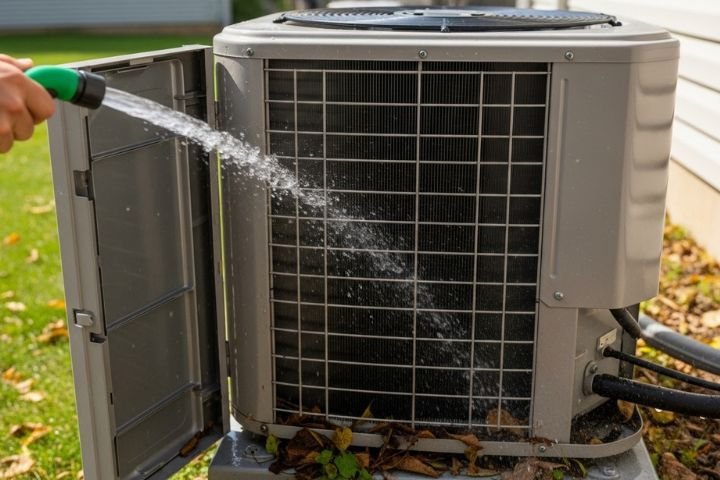
Step 3: Gently Rinse the Unit
Using a garden hose on a light spray, rinse the outside of the condenser coils. Spray from the outside toward the center to push dirt out rather than deeper into the fins. Never use a pressure washer because it can flatten the fins and damage the coils.
Step 4: Apply Coil Cleaner
Spray a foaming condenser coil cleaner evenly across the coils. Allow it to sit for the recommended time so it can break down dirt and grease. Avoid spraying electrical components.
Step 5: Rinse Thoroughly
Rinse the coils again with gentle water pressure until all cleaner and loosened dirt are removed. Make sure water drains freely from the unit.
Step 6: Straighten Bent Fins
If you notice bent fins, carefully straighten them using a fin comb. Straight fins allow proper airflow and help the unit cool more efficiently.
Step 7: Restore Power
Once the unit is clean and dry, reinstall any panels, reconnect the disconnect box, turn the breaker back on, and reset the thermostat.
How Often Should You Clean an Outdoor AC Unit
For most homes, cleaning the outside air conditioner unit once a year is sufficient. If you live in an area with heavy dust, pollen, coastal salt air, or nearby trees, inspect the unit every few months and clean it as needed.
At a minimum:
- Check monthly during cooling season
- Clean at least once per year
- Clean more often if debris builds up quickly
What Not To Do When Cleaning an Outside AC Unit
Avoid these common mistakes:
- Do not use a pressure washer
- Do not spray water directly into electrical boxes
- Do not use harsh chemicals or bleach
- Do not bend or crush the fins
- Do not attempt refrigerant or compressor repairs yourself
Signs You Should Call a Professional
While basic cleaning is safe for homeowners, some situations require professional service:
- The unit does not turn on after cleaning
- You hear grinding, buzzing, or hissing sounds
- Cooling performance does not improve
- The coils are heavily corroded
- The fan or compressor appears damaged
If you are unsure at any point, it is better to stop and contact an HVAC professional.
Final Thoughts
Learning how to clean an outside air conditioner unit is an easy and cost effective way to keep your cooling system running smoothly. With regular maintenance, your AC will cool more efficiently, last longer, and save you money over time.
A clean outdoor unit means better airflow, lower energy usage, and fewer unexpected breakdowns during the hottest months of the year.