
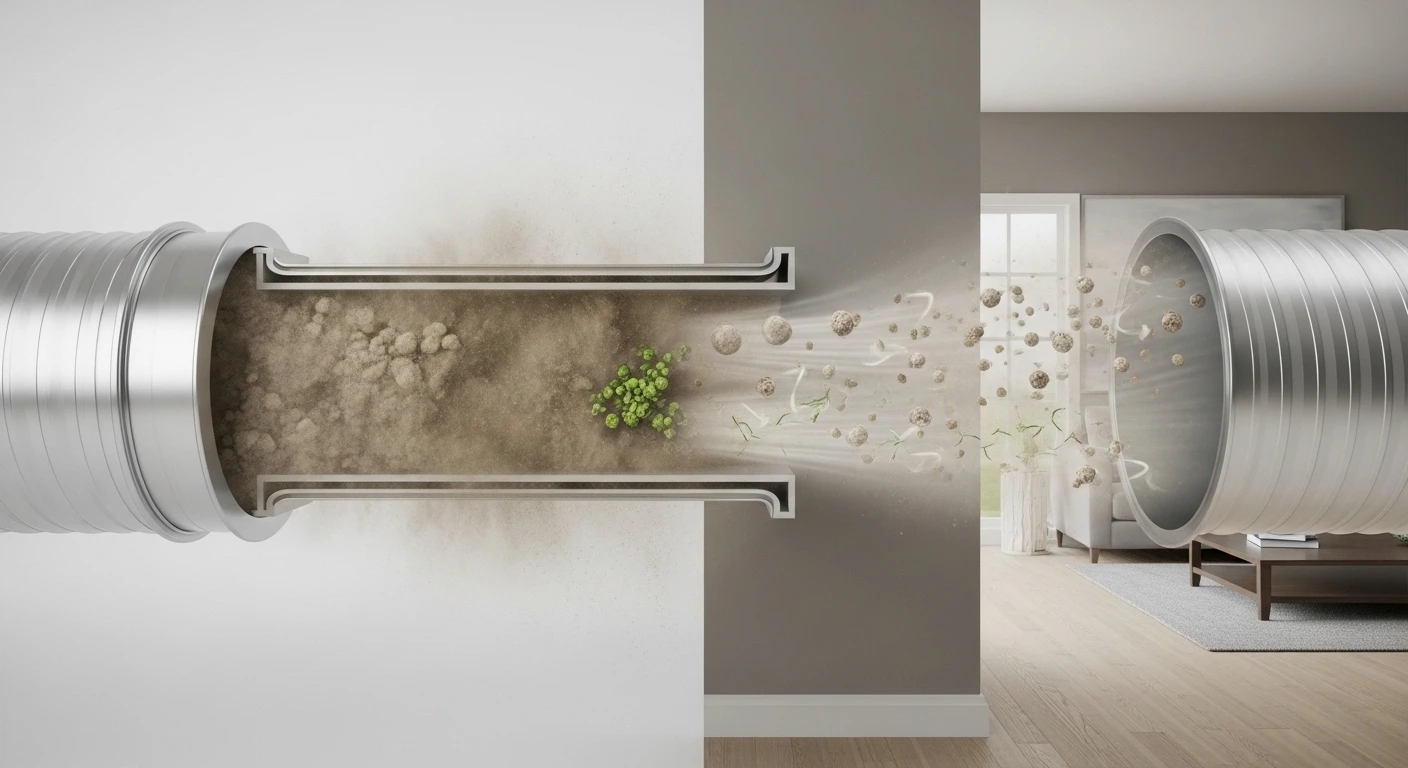
Indoor air quality plays a critical role in your home’s comfort, health, and overall livability. Yet one of the most overlooked indoor air pollution sources is hidden behind walls, ceilings, and floors dirty air ducts. Over time, ductwork contamination can significantly reduce HVAC air quality and expose your household to harmful pollutants.
In this guide, we’ll break down how dirty ducts affect indoor air quality, the health risks involved, common warning signs, and why air duct cleaning is essential for a healthier home.
What Are Dirty Air Ducts?
Air ducts are responsible for circulating heated and cooled air throughout your home. As air repeatedly passes through the system, particles such as dust, pollen, pet dander, and moisture accumulate inside the ductwork. Without proper HVAC system maintenance, this buildup leads to ductwork contamination that directly affects indoor air quality.
Common contaminants found in dirty ductwork:
- Dust buildup in air vents
- Mold spores and mildew
- Allergens in ductwork (pollen, pet dander, dust mites)
- Bacteria and airborne microbes
- Construction debris and insulation particles
When your HVAC system runs, these pollutants are redistributed throughout your living spaces.
How Dirty Ducts Impact Indoor Air Quality
Dirty ducts act as a reservoir for pollutants, lowering HVAC air quality and increasing airborne irritants.
Key ways dirty ducts reduce indoor air quality:
- Continuous recirculation of contaminants
- Increased airborne dust and allergens
- Moisture retention that encourages mold in air ducts
- Reduced HVAC efficiency, causing stale air
This contamination directly contributes to poor indoor air quality symptoms, even in homes that appear clean on the surface.
How Dirty Ducts Affect Health
One of the most serious concerns is how dirty ducts affect health, especially for vulnerable individuals such as children, seniors, and people with asthma or allergies.
Health problems linked to dirty air ducts:
- Sneezing, coughing, and nasal congestion
- Headaches and chronic fatigue
- Eye, nose, and throat irritation
- Asthma flare-ups and breathing difficulties
- Worsening allergy symptoms
- Increased risk of respiratory infections
If air vents are blowing dust or emitting musty odors, your ductwork may be contributing to ongoing health issues.
Signs of Dirty Air Ducts You Shouldn’t Ignore
Recognizing the signs of dirty air ducts early can help prevent long-term health and HVAC problems.
Warning signs include:
- Air vents blowing dust when the system turns on
- Visible dust buildup in air vents and registers
- Mold growth around vents or inside ductwork
- Persistent musty or stale odors
- Uneven airflow or reduced HVAC performance
- Rising energy bills without increased usage
These indicators often point to deeper ductwork contamination that requires professional attention.
Mold in Air Ducts: A Serious Indoor Air Threat
Mold in air ducts is one of the most dangerous indoor air pollution sources. Moisture from humidity, leaks, or condensation creates the perfect environment for mold growth inside ductwork.
Once present, mold spores circulate throughout your home every time your HVAC system runs—dramatically lowering indoor air quality and increasing health risks.
Symptoms linked to mold-contaminated ducts:
- Chronic coughing or wheezing
- Sinus infections
- Skin irritation
- Lingering musty smells
- Increased asthma attacks
How Air Duct Cleaning Improves HVAC Air Quality
Professional air duct cleaning removes accumulated debris, allergens, and microbial growth from your ductwork, restoring healthy airflow.
Air duct cleaning benefits:
- Improved indoor air quality
- Reduced allergens in ductwork
- Elimination of mold spores and bacteria
- Cleaner air vents and registers
- Better HVAC efficiency and airflow
- Lower energy consumption
- Reduced strain on HVAC components
Clean ducts allow your system to circulate fresh, filtered air instead of polluted air.
Dirty Ducts and HVAC System Efficiency
Beyond health concerns, dirty ducts negatively impact HVAC system maintenance and performance. Dust and debris restrict airflow, forcing your system to work harder to maintain comfort.
Effects of dirty ductwork on HVAC systems:
- Reduced cooling and heating efficiency
- Increased wear and tear on components
- Higher energy bills
- Shortened HVAC system lifespan
Routine duct cleaning supports both indoor air quality and long-term system reliability.
How Often Should Air Ducts Be Cleaned?
While every home is different, most HVAC professionals recommend air duct cleaning every 3–5 years, or sooner if:
- You notice poor indoor air quality symptoms
- There’s visible mold in air ducts
- You’ve recently renovated your home
- You own pets that shed heavily
- Someone in your household has allergies or asthma
Final Thoughts: Protect Your Indoor Air Quality
Dirty air ducts are a hidden yet powerful contributor to poor indoor air quality. From allergens and dust buildup in air vents to mold growth and health risks, contaminated ductwork can quietly impact your home every day.
Investing in regular air duct cleaning and proper HVAC system maintenance helps eliminate indoor air pollution sources, improves HVAC air quality, and creates a healthier living environment for your family.
If you’re experiencing unexplained allergy symptoms, rising energy costs, or air vents blowing dust, your ductwork may be the problem—and cleaning it could be the solution.