
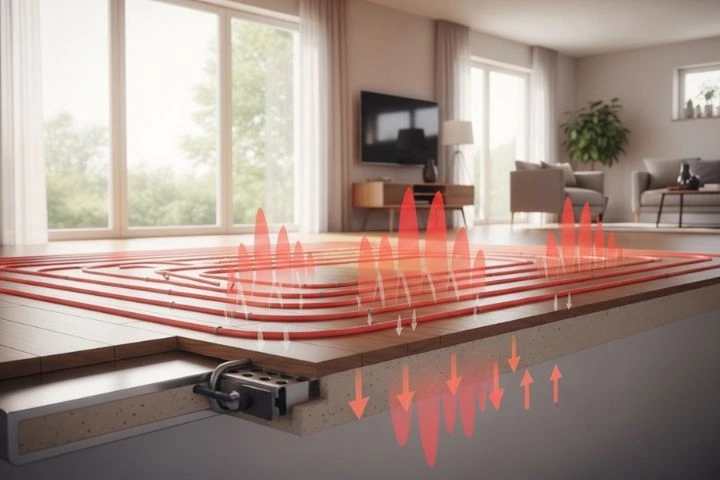
Many homeowners begin researching what is radiant heat in a house because they want better comfort, but the benefits go far beyond that. Radiant heat in house systems is known for reliable performance and low maintenance since it uses fewer moving parts than traditional forced air systems. It makes radiant heat for home use a dependable choice for those who want consistent heating with fewer service issues over time.
Radiant heating is widely regarded as one of the most efficient and comfortable ways to heat a home. Rooms feel evenly warm from the ground up, so your feet stay warm and the temperature feels balanced throughout the space. There are no sudden temperature changes, drafts, or noisy equipment turning on and off.
What Does Radiant Heating Mean?
Radiant heating is a system that warms your home by delivering heat directly to people and objects rather than heating the air first. The heat radiates upward from a warm surface, usually the floor, and gently fills the room. This creates consistent warmth without drafts, cold spots, or noisy air movement.
In simple words, radiant heating works the same way the sun warms your skin on a cool day. You feel comfortable even if the air temperature is slightly lower.
What Is Radiant Heat in a House and How Does It Work?
Traditional heating systems rely on convection. Warm air rises, cool air sinks, and the cycle repeats. This often leads to uneven temperatures and heat loss. Radiant heat in a house works differently. It transfers warmth directly from heated surfaces into the living space.
Because of this, radiant heat in house environments feels more natural and balanced. Floors feel warm underfoot, furniture stays comfortable, and rooms maintain an even temperature from floor to ceiling.
There are two common types of radiant heating systems:
- Hydronic radiant heating: Uses warm water flowing through flexible tubing beneath the floor. The water is heated by a boiler, water heater, or heat pump.
- Electric radiant heating: Uses electric cables or heating mats installed under the flooring to produce heat.
Both systems heat the floor surface, which then radiates warmth upward into the room. This method reduces heat loss and provides consistent comfort throughout the space.
Radiant Heat for Home Comfort
Radiant heat for home use is especially popular in colder climates, bathrooms, kitchens, and open living areas. However, it works well in nearly any room.
Some of the biggest comfort benefits include:
- No cold floors during winter
- Even heat distribution across the room
- Silent operation with no fans or blowers
- Improved indoor air quality since no dust is circulated
Because radiant heat does not rely on air movement, it is often preferred by people with allergies or respiratory sensitivities.
Radiant Heating vs Forced Air Heating
- Radiant heating warms people and surfaces directly, while forced air heats the air first and then circulates it through vents.
- The radiant heat in a house provides consistent temperatures from floor to ceiling, whereas forced air often creates hot and cold spots.
- Radiant heat for home systems operate silently, unlike forced air systems that rely on noisy fans and blowers.
- Radiant heat energy efficiency is higher because there is no heat loss through ductwork.
- Forced air systems can spread dust and allergens, while radiant heat in house environments improves indoor air quality.
Radiant Heat Energy Efficiency Explained
One of the most common questions homeowners ask is about radiant heat energy efficiency.
Radiant heating systems are highly efficient because they minimize wasted heat. Since warmth is delivered directly to surfaces and people, you can often keep your thermostat lower while still feeling comfortable. This can reduce overall energy usage.
Hydronic systems are especially efficient when paired with modern boilers or renewable energy sources. Electric systems can also be efficient in smaller areas or when used as zone heating rather than whole house heating.
Key efficiency advantages include:
- Lower operating temperatures compared to forced air
- Reduced heat loss through ducts
- Better zoning control by room or area
Over time, these advantages can translate into noticeable savings on heating bills.
Installing Radiant Heating in a House
Installing radiant heating can be done in both new construction and existing homes, though the approach differs.
In new builds, radiant systems are typically installed before flooring is laid, making the process straightforward. In existing homes, installation may involve removing floors or installing systems beneath subfloors.
Common flooring options that work well with radiant heating include tile, stone, engineered wood, vinyl, and some laminates. Carpets can be used, but it may reduce heat transfer if too thick.
While installation costs can be higher upfront than traditional systems, many homeowners see long term value through energy savings and improved comfort.
Installation Cost Considerations for Radiant Heating
- Installing radiant heating typically has a higher upfront cost compared to traditional heating systems.
- Electric radiant heating is generally more affordable for small areas like bathrooms or kitchens.
- Hydronic radiant heat systems cost more initially but offer better long term efficiency for whole house heating.
- Installation costs depend on home size, flooring type, and whether the project is new construction or a retrofit.
- Understanding what radiant heating is helps homeowners evaluate the long term savings against the initial investment.
Is Radiant Heating Right for You?
Now that you understand what radiant heating is, the decision comes down to comfort, budget, and long term goals. Radiant heat in a house offers quiet operation, consistent warmth, and excellent efficiency. It is especially appealing for homeowners who value comfort and are planning renovations or new construction.
If you want a heating system that feels natural, reduces energy waste, and improves everyday comfort, radiant heating is a smart and future ready solution.
Final Thoughts
Radiant heating is not just a luxury. It is a proven, efficient way to heat a modern home. Another important factor when people ask what radiant heat is in a home is how it supports zoned heating. With radiant heating, each room or area can be controlled independently. This means unused spaces do not waste energy, improving overall radiant heat energy efficiency.